Why Fall From Earth
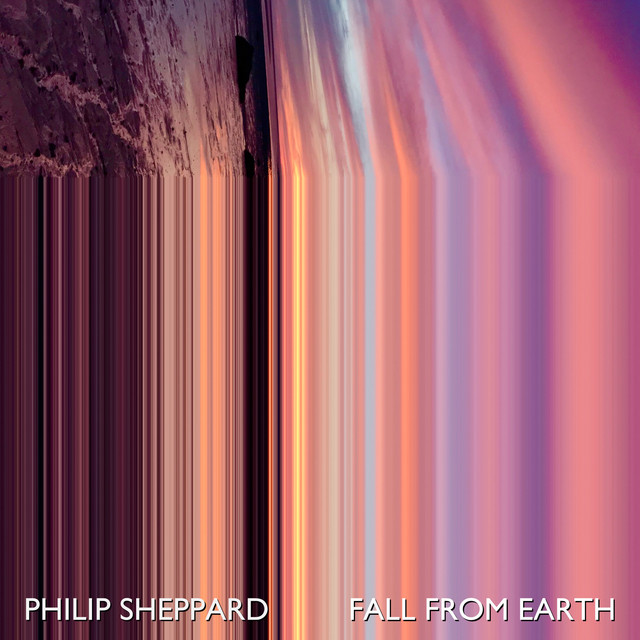
Fall From Earth is Philip’s second solo orchestral album, released on 22 June 2018 and recorded in Studio 1 at Abbey Road with Philip conducting.
“I love the idea of losing belief in gravity itself, somehow leaving the surface of this small blue dot and flying higher, further and faster, literally and metaphorically. Falling from earth is what the god Hermes did in ancient legend, and by the 1960s we humans could leave the earth, via Apollo, Hermes’ half-brother, in order to look back and think: my God, we’re lucky.”
“But stillness is also the key to elevation, and this album is equally about those people who fly without moving a muscle: those whose flights are of imagination, their ideas flying beyond a mere lifespan. It is also about the girl who left a handprint on a cave wall in Indonesia 40,000 years ago just to say I was here. If one of these pieces can give one listener goosebumps in the way that handprint does for me, then every moment of making this record has been worth it.”
Many of the ideas behind the album come from Nick Sousanis’ drawn essay Unflattening.
Track by track
In Philip’s words.
Apotheosis
Those peak moments when a person seems to step out of being mortal and becomes something wondrous. “Through my documentary work I’ve met many people who have stepped beyond what appears possible, their lives defined by single moments of courage. I suspect the greatest of these moments are often invisible.”
Chosen Road
Written in a single afternoon for the violinist Clio Gould, who led the orchestra for the sessions. “We first played together when we were 15. Her sound is effortless, silken, chocolatey and quite unlike anybody else’s. This is my way of saying thank you to her.”
Fall From Earth
For Pamela Neville-Sington. “What would it feel like if we stopped believing in gravity? The first time I flew to America, in 1979, my face was pressed against the window, honestly believing that what was outside was possibly what heaven looks like. I’m still that kid.”
Unflattening
For Nick Sousanis. “For me, the music starts flowing when words fail me, and I think Nick draws in the way that I’d like to be able to compose.”
Every Line
A simple chorale, a hymn to life and friendship, with Philip’s Georgian cello and his electric cello taking the very high solos.
Breaking Light
Dawn breaking over the mountains of Montana, the tips of the peaks lit with fiery light that washes down the slopes as birds of prey circle into the valleys.
Hope Remains
Written for Greg Barker’s The Final Year, about President Obama’s last year in office, and rejected from the film for being too hopeful. “In documentary the viewer has to feel they are creating their own truth. The title alludes to Pandora’s Box: once opened, it held one last thing. Hope.”
This Is Your Future Self
Written alongside Philip’s first game score, Detroit: Become Human, as a counterpoint to its bleak future. “It’s easy to be pessimistic about the future, and easy to write melancholic music. This piece is neither.”
Chasing Thought
The grain of an idea growing into a movement: two scale patterns running side by side until they lock together. “It reminds me of the practice corridor at the Royal Academy of Music, where scales and concertos would collide in a cacophony and, just occasionally, synchronise into a moment of utter beauty.”
I Am Alive
For Emily Levine, philosopher and comic. “She burns with life. This piece is a quiet little reflection.”
Chosen Road Alone
Chosen Road revisited as a cadenza with orchestra, the violin soaring free, recorded in Abbey Road Studio 1, “to my mind and ear the finest acoustic in the world.”
Fallingwater Dawn
Ousel Falls in Montana, and Frank Lloyd Wright’s house astride a waterfall in Pennsylvania. “Whatever is going on in the world, that water will continue to cascade hundreds of years from now.”
Press
“His finest and most self-contained creation”